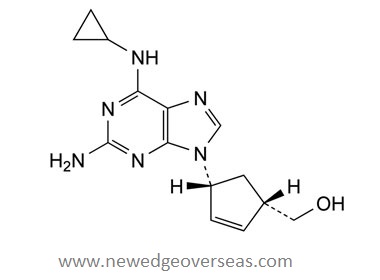
Abacavir hydrochloride is a nucleoside reverse transcriptase inhibitor (NRTI)
Product Description
Chemical name:
Abacavir HCL
CAS Number:
136777-48-5
Therapeutic Category:
Antiretroviral, Anti HIV
Route of Administration:
Solution , Tablet
Mechanism of Action:
Abacavir is a carbocyclic synthetic nucleoside analogue and an antiviral agent.Carbovir triphosphate inhibits the activity of HIV-1 reverse transcriptase (RT) both by competing with the natural substrate dGTP and by its incorporation into viral DNA.Viral DNA growth is terminated because the incorporated nucleotide lacks a 3′-OH group, which is needed to form the 5′ to 3′ phosphodiester linkage essential for DNA chain elongation.
Drug Indications:
Abacavir is indicated in combination with other anti-retroviral agents for the treatment of HIV-1 infection.Abacavir should always be used in combination with other antiretroviral agents. Abacavir should not be added as a single agent when antiretroviral regimens are changed due to loss of virologic respons
Abacavir hydrochloride exists in the hydrochloride variant of Abacavir, which is also known as Ziagen (sc-338739). It functions as a nucleoside reverse transcriptase inhibitor (NRTI). NRTIs operate by obstructing the activity of HIV reverse transcriptase, an enzyme central to the HIV virus. Abacavir hydrochloride serves as a suppressor of HIV-1 RT, the reverse transcriptase enzyme specific to HIV-1.
Applications: Abacavir is an antiviral nucleoside reverse transcriptase inhibitor used in combination with other antiretrovirals for the treatment of HIV. Abacavir (ABC) is a powerful nucleoside analog reverse transcriptase inhibitor (NRTI) used to treat HIV and AIDS. Chemically, it is a synthetic carbocyclic nucleoside and is the enantiomer with 1S, 4R absolute configuration on the cyclopentene ring. In vivo, abacavir sulfate dissociates to its free base, abacavir.
Abacavir api supplier
Abacavir API (Active Pharmaceutical Ingredient) is a critical component in the production of antiretroviral medications used for the treatment of HIV infection. As a reliable and high-quality API, Abacavir plays a pivotal role in ensuring the efficacy and safety of antiretroviral drugs. In this article, we will delve into the significance, manufacturing process, quality standards, and key considerations associated with Abacavir API.
1. The Significance of Abacavir API in HIV Treatment:
Abacavir API serves as the fundamental building block for formulating antiretroviral medications. It is an essential ingredient that contributes to the therapeutic effectiveness of these drugs by inhibiting the replication of the human immunodeficiency virus (HIV). By incorporating Abacavir API into their formulations, pharmaceutical companies can produce antiretroviral medications that effectively manage HIV infection.
2. Manufacturing Process and Quality Control:
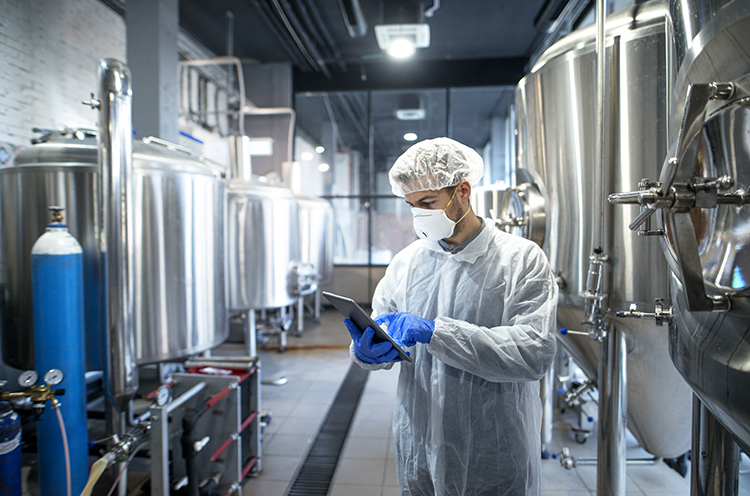
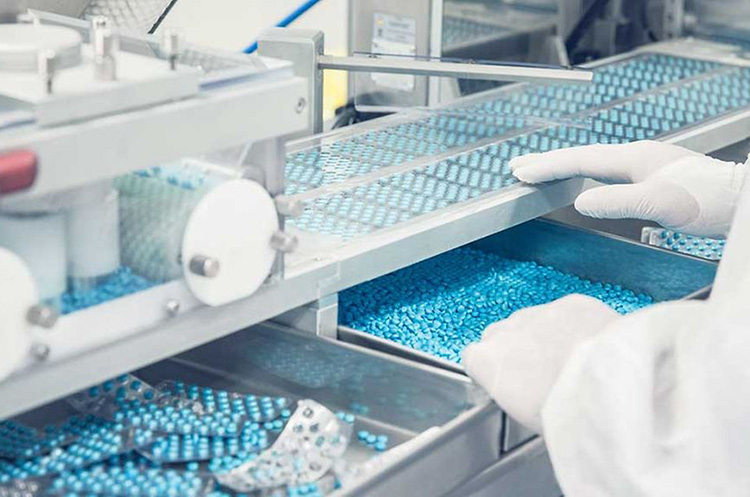
The production of Abacavir API involves a meticulous manufacturing process that adheres to stringent quality control measures. Specialized laboratories and manufacturing facilities follow Good Manufacturing Practices (GMP) to ensure the highest quality standards throughout the production cycle. These practices encompass various stages, including sourcing of raw materials, synthesis, purification, and testing to guarantee the purity, potency, and consistency of Abacavir API.
The Turkish pharmaceutical industry is the most strategic industry supporting the country’s industrial transformation. Due to its considerable population size, Turkey’s pharmaceutical market is the third-largest in the CEE (Central and Eastern Europe) region. In addition, the pharmaceutical industry in Turkey has a deeply-rooted history and expert production experience. As a result, they can compete with developed countries with a qualified workforce and a high added-value structure founded on leading-edge technology. The Ministry of Health regulates the pharmaceutical industry in Turkey.
According to the Pharmaceutical Manufacturers Association of Turkey (IEIS), approximately 680 companies compete in the country’s pharmaceutical industry. Together, they operate 96 pharmaceutical and 11 raw material production facilities. The pharmaceutical companies in Turkey provide the country’s growing and aging population with more than 12 thousand products and exports to approximately 180 countries with nearly 40 thousand employees.
The International Presence of Turkey in the Pharmaceutical Market:
The Turkish Government aims to make Turkey one of the world’s top ten economies in health services by 2023 by increasing R&D expenditures to 3% of GDP and by increasing exports to USD 500 billion. Moreover, according to the Turkish Ministry of Science, Industry, and Technology (AIFD) ‘s Report, Turkey should become the Eurasian production base for medium- and high-level technology products. Considering Turkey’s current macroeconomic conditions, political stability, and increasing economic efficiency, AIFD considers these R&D targets realistic.
As per the Global Business Reports, the Turkish pharmaceuticals industry was valued at approximately US$6 billion. The industry represents around 0.5% of the global pharmaceutical market of US$1.2 trillion, having grown steadily in the past decade. Besides increasing its output, the industry has also committed to more R&D projects and manufacturing higher-value drugs. In 2018, Turkey was recognized as part of the international PIC(s) alliance of pharmaceutical jurisdictions, taking a seat on the global scene while simultaneously rolling out its localization policy.
Exports from Turkey:
According to the AIFD Vision 2023 report, Turkey has a significant opportunity to become essential services and pharma products supplier for neighboring regions with its location advantage and a total export potential of USD 8 billion. While the Turkish pharmaceutical sector is ranked 16th across the world in terms of market value, it is 36th in terms of clinical research and pharmaceutical exports. Moreover, Turkey is a regional center due to its strategic geographical location, and it has the advantage of exporting to markets such as the Middle East and Eastern Europe.
NEWEDGE Overseas has offices and a robust presence in Egypt, Ukraine, Iran, UAE, Colombia, USA and Germany. Providing advanced pharma solutions across the globe, NEWEDGE Overseas exports a wide range of products to more than 40 countries including Turkey, representing more than 500+ partnerships in India for our export markets. So, Kindly contact us for your pharmaceutical needs.
The pharmaceutical industry in Ukraine is the industry that develops the national economy. The pharmaceutical industry in Ukraine is amongst the ten biggest pharmaceutical industries in the Central and Eastern European (CEE) region. The Ukrainian drug market has not recovered from the 2014–2015 crisis, but it is constantly growing. Despite the country’s unstable social and economic situation, the domestic pharmaceutical market has grown. According to the government data, the volume of pharmaceutical market of Ukraine in 2019 amounted to 3.4 billion USD.
As per the research article published in “PHARMACIA,” more than 60% of medicines registered in Ukraine are generics, and only 12% are original drugs. Thus, the pharmaceutical market of Ukraine is mainly a generic market, which distinguishes it from the markets of developed economies, where the share of original drugs is much higher.
Statistical figures of growth of the pharmaceutical industry in Ukraine:
As per the UkraineInvest report, Ukraine’s pharmaceutical sector is one of the fastest-growing and most crisis-resistant consumer industries in the economy. A significant growth driver is import substitution, building a solid case for international pharma companies to increase investment by purchasing existing players or building their manufacturing in Ukraine.
In Ukraine, the pharmaceutical industry has great potential, combining intensive output growth and investments in R&D. In the conditions of increased demand for the products of pharmaceutical companies in Ukraine in 2016-2020, CAGR for a specified period was 11.5%, while capital investments grew at an average rate of 16%.
During 2016-2018, Ukrainian pharmaceutical manufacturers received nine GMP certificates from the regulatory authorities of the EU member states, which is a prerequisite for entry into European markets.
Strengths of the Pharmaceutical companies in Ukraine:
Increased production of generic drugs
Expertise in manufacturing medicinal products
Growing presence in foreign markets
Skilled personnel
Availability of primary pharmaceutical products
Export and Import from the Ukraine pharmaceutical industry:
The leading importers of medicines to Ukraine are Germany, India, France, Italy, Slovenia, and Hungary. In addition, about 80% of APIs are imported from China and India.
In the global ranking of exporters of pharmaceutical products in 2017, Ukraine was ranked 61st with $0.18 billion, indicating a significant export potential of the Ukrainian pharma. In 2018, Ukrainian pharmaceutical products were sold to 81 countries of the world, while in 2017, only to 50. The volume of export sales in 2018 amounted to $184 million. Also, over the past five years, domestic drug manufacturers have been increasing exports to Belarus, Kazakhstan, Azerbaijan, Uzbekistan, Moldova, and Georgia.
Prominent players in the pharmaceutical market of Ukraine:
Foreign companies primarily dominated the Ukrainian pharmaceutical industry until 2014. However, Ukrainian companies Farmak International and Arterium Corporation are recently emerging as the leading industry players. Some other prominent players in the Ukraine pharmaceutical market include:
Kusum Pharma
STADA Group
Biopharma
Acino
GlaxoSmithKline
Roche
AbbVie
Merck & Co.
Novartis
Sanofi
NEWEDGE Overseas has offices and a robust presence in Egypt, Ukraine, Iran, UAE, Colombia, USA and Germany. Providing advanced pharma solutions across the globe, NEWEDGE Overseas exports a wide range of products to more than 40 countries, representing more than 500+ partnerships in India for our export markets. So, Kindly contact us for your pharmaceutical needs.
The pharmaceutical industry in Brazil has seen steady growth in the past few years. The pharmaceutical and healthcare market in Brazil is the biggest in Latin America. The Brazilian pharmaceutical market is also one of the most attractive markets in the American region, drawing investments worldwide where generic products dominate the industry.
As per the international trade administration (ITA), Brazil ranks among the top seven markets in size for drugs and pharmaceuticals, with sales of US$ 17.5 billion in 2019. Further, Brazil is the largest healthcare market in Latin America and spends 9.1% of its GDP on healthcare.
As the world’s sixth most populous country, Brazil represents an enormous market opportunity in Latin America for multinational pharmaceutical companies. However, several midsize companies find it challenging to venture into the country as the domestic pharmaceutical companies in Brazil hold a significant share of the overall market in the country.
Statistical figures of growth of the pharmaceutical industry in Brazil:
The pharmaceutical market in Brazil is predicted to reach $29.9 billion in 2021 with a growth rate of 3.5%, according to research and consulting firm GlobalData, published in the article of PharmExec.
Global pharmaceutical companies are highly interested in investing in this vast and growing market. However, this opportunity may present a significant challenge when helming through the complex Brazilian regulatory process.
ANVISA is the counterpart of the FDA and regulates all health-related products. The Brazilian Health Regulatory Agency (Anvisa) is an autarchy linked to the Ministry of Health, part of the Brazilian National Health System (SUS) as the coordinator of the Brazilian Health Regulatory System (SNVS), present throughout the national territory.
Anvisa’s role is to promote the protection of the population’s health by executing sanitary control of the production, marketing, and use of products and services subject to health regulation, including related environments, processes, ingredients, and technologies, as well as the control in ports, airports, and borders.
Impact of the Covid 19 Pandemic on the country:
Brazil is one of the worst COVID-affected countries in the world. In addition, the Brazilian government has been severely criticized for its handling of the pandemic. Nevertheless, the Brazilian authorities have started taking unprecedented measures to tackle the drug shortages and manage the pandemic. For example, the government has given fast-track approvals to COVID-related drugs, desktop GMP clearance to manufacturing facilities, and special import authorization to products manufactured outside Brazil. As a result, in March 2021, Brazilians began receiving the first dose of the COVID-19 vaccine.
Prominent players in the pharmaceutical market of Brazil:
As per the article of PharmaBoardroom, six of the top ten companies in the Brazilian pharma market are domestic. Some of the prominent players in the pharmaceuticals market of Brazil include:
Ache
EMS Pharma
Eurofarma
Sanofi
Novartis
NEO Quimica
Mantecorp Farmasa
Libbs
Biolab-Sanus Farma
Takeda
NEWEDGE Overseas has offices and a robust presence in India, Egypt, Ukraine, Iran, UAE, Colombia, USA, and Germany. Providing advanced pharma solutions across the globe, NEWEDGE Overseas exports a wide range of products to more than 40 countries, including Brazil, representing more than 500+ partnerships in India for our export markets. So, Kindly contact us for your pharmaceutical needs.
API pharmaceutical is a renowned word in the pharmaceutical industry. API (Active Pharmaceutical Ingredient) or pharma ingredients are used in a finished pharmaceutical product (FPP) to furnish pharmacological activity. They directly affect the diagnosis, cure, mitigation, treatment, or prevention of disease or restoring, correcting, or modifying physiological functions in human beings. API is the biologically active component of a drug product that produces the intended effects.
To manufacture or import Active Pharmaceutical Ingredient (API)/drugs to India, the company or the organization should seek prior approval from Drugs Controller General Of India (DCGI) for licensing to produce and distribute. In addition, to produce the drugs, the company should also follow the norms as stipulated by the Central Drugs Standard Control Organisation (CDSCO). Furthermore, API pharma companies in India should follow the FDA regulatory guideline Q7 to manufacture their APIs. Some critical regulatory documents associated with APIs are discussed below:
DMF:
A drug master file is a document submitted to governmental bodies that contains all details of the manufacturing process of an API or medicine. For example, DMF includes information on the chemical properties of the API, the facilities used, the processes used, details on packaging, storage, etc. DMF is an essential document to protect the intellectual property of the manufacturer. Please refer to FDA guidance “Drug Master Files” for detailed insights.
Countries may have different guidance compared to other countries, so different types of DMF exist. For example, USDMF, ASMF (formally known as EDMF), Japanese DMF, Taiwan DMF, Brazil DMF, Mexico DMF, Canada DMF, China DMF, etc.
CEP:
A CEP is a certificate of sustainability that proves that an API qualifies to the relevant monograph of the European Pharmacopoeia. It links the monograph in the Ph. Eur. to the API itself. The API manufacturer submits a CEP as part of the market authorization process and will become the CEP holder of the document. The CEP is granted by the European Directorate for the Quality of Medicines (EDQM) but is recognized by other countries or institutes like the FDA. Furthermore, just like the DMF, the data submitted in the CEP is handled strictly confidential and provides a centralized system recognized by many countries.
COAs:
A Certificate of Analysis (CoA) is a crucial document provided with a range of pharmaceutical products. It reports on the quality assessment of the production lot, ensuring that the released product meets the desired quality standards. The CoA commonly contains results obtained from individual product batch laboratory tests. There are different international standards to which a product can be tested, for example:
Ph. Eur. | EP – (European Pharmacopoeia)
USP – (United States Pharmacopeia)
BP – (British Pharmacopoeia)
JP – (Japanese Pharmacopoeia)
ChP – (Chinese Pharmacopoeia, also known as PPRC)
DAB – (German Pharmacopoeia)
Ph.Fr. – (French Pharmacopoeia)
Ph.Fr. – (Indian Pharmacopoeia)
MSDS:
A Material Safety Data Sheet (MSDS) is a product-specific document intended as a reference work for safe use, handling, and processing. It contains identifiers, chemical properties, health hazards, precautionary statements, and other related information for professionals working with the product.
TECH PACK, TDP:
A tech pack is a document containing all the technical information about the API. This document covers information from the R&D stage and includes stability data also. A Technical Data Package (TDP) includes the technical design and manufacturing information to enable specific maintenance or production processes.
NEWEDGE Overseas has a robust 2000+ Active Pharmaceutical Ingredients portfolio that includes many hard-to-find APIs, consolidated over a decade. We provide necessary documents with APIs such as DMFs, CEPs, TECH PACK, TDP, COS, etc. Kindly contact us for your API requirements and advanced pharma solutions.
The Global Pharma Industry has been on the frontline to fight against the pandemic with the healthcare providers. Consequently, pharmaceutical companies across the globe have witnessed changes faster than a roller coaster ride in the past few years. New research and development of vaccines and medicines to decrease the effect of the virus are abundant in many companies.
As a result, pharmaceutical sales in the 60 biggest markets worldwide are expected to increase by 4.6% in US-dollar terms to about US$1.5trn. The growth is faster than most of the records of the previous decade. Despite the economic slowdown of the countries, the rise of sales in the pharmaceutical sector is remarkable. Before going further on how pandemic in 2022 will affect the Global Pharma industry, let us go through the history and origin of the covid virus.
History, consequences of the pandemic on the pharmaceutical industry in past years
Coronavirus Disease of 2019 (COVID-19) refers to an infectious respiratory ailment brought about by a strain of coronavirus first discovered in December 2019. Having originated from Wuhan, China, the disease has spread to virtually every country worldwide. As a result, the novel coronavirus disease 2019 (COVID-19) was characterized as a global pandemic by the WHO on March 11, 2020.
Globally, there have been 270,031,622 confirmed cases of COVID-19, including 5,310,502 deaths, reported to WHO recently. These numbers are getting updated daily on the WHO coronavirus dashboard. This pandemic had revolutionary effects on the health market and the pharmaceutical sector. The consequences of the pandemic are cited below:
Increased demands of drugs for chronic disease
Revisions of regulations
A shift towards self-reliance of products for manufacturing
Delays of approval of filed products
An industrial slowdown of non-covid drugs
Transformations in the supply chain due to disruptions
Changing trends in the consumption of the health market
Development of vaccines and medicines for the treatment of the virus
Vaccine distribution and its efficacy
Innovation has been a significant drive in the pharmaceutical industry for years. For example, the industry worked vigorously towards developing vaccines to prevent the coronavirus and produced it in a record time of fewer than 12 months.
As per the latest reports, 56.4% of the world population has received at least one dose of a COVID-19 vaccine. Yet, only 7.3% of people in low-income countries have received at least one dose. Moreover, according to WHO, as of December 12, 2021, about 8,200,642,671 vaccine doses have been administered.
With the new mutations and variants of coronavirus, such as delta and omicron variants, scientists across the globe are doing extensive research on the effectiveness of the different COVID-19 vaccines. High immunization through vaccines can not wholly prevent the variants of the virus but provide different levels of protection to infection, mild disease, severe disease, hospitalization, and death.
We have to keep in mind that no vaccine is 100% effective. WHO authorized vaccines only reduce your risk of developing severe illness and death. The details on frequently asked questions related to vaccines are available on the website of WHO.
Accelerated R&D approach and clinical trials
Pandemic has stimulated the process of research and development in the pharma companies. For example, the first antiviral oral medicine, Molnupiravir, developed by Merck and Ridgeback, has received approval from MHRA (U.K.) and is under evaluation by FDA. Merck expects to produce 10 million courses by the end of 2021. Another drug Paxlovid from Pfizer is also a potential hope for the future. Pfizer plans to submit its trial data to the US FDA for emergency use authorization as soon as possible.
Digital data-driven research is the new key element currently. In addition, the pursuit of medication errors prevention and quality improvement has led to a growing interest in artificial intelligence (AI) and precision medicine.
Clinical trials were previously carried out on-site, but the lockdown has shifted this practice to speedy virtual trials. In addition, companies are taking a holistic approach to carrying out clinical trials safely and effectively. They are even using electronic tools and additional remote medical options in homes to monitor progress. The Remote clinical trials allow patients to participate without barriers to COVID-19 exposure.
What will be the New Normal?
The Covid-19 pandemic will not die but most likely fade away in 2022. After that, however, there will be occasional flare-ups in the countries where people are still under-vaccinated. Vaccine supply should also ease in 2022. Nevertheless, a small percentage of people will still get ill from COVID-19 even though they have been vaccinated. Hence, a new normal will be the post-pandemic normal with the cautions of masks and social distancing measures. The industry is entering 2022 in good shape with minor criticism, more central to government policy, and less budget pressure than in recent years.
Conclusion:
Regardless of the hindrances caused by the pandemic, the coming year will see an increased focus on new medicines, vaccines, and treatments. Furthermore, digital health care will gain more popularity, and healthcare costs will rise.
Despite all odds faced during the pandemic, Pharmaceutical companies across the globe are showing exponential growth. For example, some pharmaceutical companies have successfully developed covid 19 vaccines in record time with their ongoing projects of new drug developments. Further, R&D activities, new funding, technologies, and business strategies have driven the pharmaceutical industry in recent years. As a result, the FDA has approved 50 new drugs in 2021. Further, many pharmaceutical companies have met their monetary anticipations in the current year regardless of lockdown and social distancing norms.
As per the GlobeNewswire report, the global pharmaceuticals market is expected to grow from $1228.45 billion in 2020 to $1250.24 billion in 2021 at a compound annual growth rate (CAGR) 1.8%. The growth is mainly due to the companies rearranging their operations and recovering from the COVID-19 impact, which had earlier led to restrictive containment measures involving social distancing, remote working, and the closure of commercial activities that resulted in operational challenges. As a result, the market is expected to reach $1700.97 billion in 2025 at a CAGR of 8%.
We have listed the leading pharmaceutical companies by their 2021 revenue. The list below shows the top 10 pharma companies in the world in 2021:
The Company applies science and global resources to bring therapies to people that extend and significantly improve their lives by discovering, developing, manufacturing, and distributing healthcare products, including innovative medicines and vaccines.
The Company has three global businesses that discover, develop and manufacture innovative medicines, vaccines, and consumer healthcare products. Every day, the brand help improve the health of millions of people worldwide, and it is one of the top 10 oncology pharma companies.
Sanofi is a global healthcare leader and one of the best pharmaceutical companies. The company’s Primary Care and Specialty Care GBUs are focused exclusively on mature markets. The brand is among the top 20 global pharma companies.
Roche was one of the first companies to bring targeted treatments to patients and the best pharmaceutical companies. With combined strength in pharmaceuticals and diagnostics, the company is better equipped than any other company to drive personalized healthcare further.
AstraZeneca’s business is organized to sustain our strategic priorities, supporting continued scientific innovation and commercial success. They focus on discovering, developing, and commercializing prescription medicines in Oncology and BioPharmaceuticals, including Cardiovascular, Renal & Metabolism, and Respiratory & Immunology.
Established over 100 years ago, Unilever is one of the world’s largest consumer goods companies. Their products are available in over 190 countries and over 400 household name brands.
The company’s primary focus is products related to human health and well-being. Johnson & Johnson was incorporated in the State of New Jersey in 1887. It is one of the top 10 oncology pharma companies. The company presents three business segments: Consumer, Pharmaceutical, and Medical Devices.
Novartis is structured to deliver innovative products, exploit global scale, and respond to new opportunities and risks. Their divisions – Innovative Medicines and Sandoz – are supported by functional organizations globally.
For over 130 years, Merck (known as MSD outside the U.S. and Canada) has been inventing for life, bringing forward medicines and vaccines for many of the world’s most challenging diseases to pursue our mission to save and improve lives.
Wyeth has pioneered infant and young child nutrition since 1915, consistently delivering scientifically-advanced nutrition & personalized solutions for pregnant women, infants, and young kids.
The pharmaceutical industry in Germany is highly regarded and follows its tradition as the “world’s pharmacy.” Consequently, Germany constitutes a primary pharmaceutical market and fourth-largest worldwide after the USA, China, and Japan. Furthermore, Germany is the most prominent pharmaceutical manufacturing location within the European Union and ranks second in Europe after Switzerland. Moreover, Germany has the second-highest figures worldwide after the USA in biopharmaceutical production.
With more than 500 pharmaceutical companies, Germany is the ideal location for pharmaceutical R&D, production, and sales of medicines. Small and medium enterprises (SMEs) constitute the backbone of the economic sector, with around 90 percent of drug manufacturers having less than 500 employees. Overall, the German pharmaceutical industry has a qualified workforce of 120,000 people (2019). Let us drill down on the recent growth of the pharmaceutical industry in Germany.
Statistical figures of growth of the pharmaceutical industry in Germany:
As per the Grand View Research Report, the German pharmaceutical market was estimated at USD 41.35 billion in 2019 and is expected to grow at a compound annual growth rate (CAGR) of 6.0% from 2020 to 2027. Furthermore, with the increase in the patent applications focused on developing novel drugs and formulations, the German pharmaceutical market is anticipated to unfold more revenues.
The country is the largest exporter of medicinal products and ranks among the top pharmaceutical producers worldwide. The export of pharmaceutical products from Germany was US$99.26 Billion during 2020, according to the United Nations COMTRADE database on international trade. The U.S., Netherlands, and Switzerland are the top three customers for pharmaceuticals from Germany.
Major factors driving the German pharmaceutical industry:
Germany is located in the heart of Europe and has an excellent infrastructure. Moreover, it is the continent’s most populous country, with a favorable investment climate and attractive business opportunities. Accordingly, it is one of the favorites for pharmaceutical companies planning to expand their business internationally.
The country has a highly competent workforce contributing to significant R&D and clinical trial activities. New active ingredients and therapies are also researched, developed, and produced here for the domestic and world markets. In addition, they have long-standing strength in the local chemical industry.
Germany belongs to the world’s leading clinical trials locations based on R&D investment and patent application levels. Secondly, they have potent pipeline drugs in Phase III clinical trials.
Many German organizations have joined global efforts to combat the Covid-19 pandemic. Germany has also evolved into one of the leading suppliers of novel biopharmaceuticals because of the global need for personalized medicines.
Prominent players in the pharmaceutical market of Germany:
Some of the prominent players in the pharmaceuticals market of Germany include:
Boehringer Ingelheim International GmbH
Bayer AG
Merck & Co., Inc.
Fresenius Kabi AG
STADA Arzneimittel AG
Pfizer Inc.
Abbott
Abbvie Inc.
Teva Pharmaceutical Industries Ltd.
Novartis AG
Pharmaceutical Associations present in Germany:
Several associations represent the German pharmaceutical industry:
German Association for the Pharmaceutical Industry (BPI): The BPI represents approx. 240 companies. They include traditional pharmaceutical companies, pharmaceutical service providers, and companies in biotechnology, herbal medicine, and homeopathy/anthroposophy.
German Association of Pharmaceutical Producers (BAH): With more than 450 members, the BAH has the most members among the pharmaceutical industry associations in Germany. Its members are primarily pharmaceutical producers, pharmacists, lawyers, publishers, agencies, and market and opinion research institutes in the healthcare field.
Pro Generika: Pro Generika is the association of companies that manufacture generic and biosimilar products in Germany. Pro Generika has 16 member companies in Germany. Companies manufacturing generic and biosimilar products together cover over 75 percent of the medicinal drugs required by the statutory health insurance funds.
NEWEDGE Overseas has offices and a robust presence in India, Egypt, Ukraine, Iran, UAE, Colombia, USA, and Germany. Providing advanced pharma solutions across the globe, NEWEDGE Overseas exports a wide range of products to more than 40 countries, representing more than 500+ partnerships in India for our export markets. So, Kindly contact us for your pharmaceutical needs.
Nutraceutical products have physiological benefits, protect against chronic diseases, improve health, delay aging, and increase life expectancy. In addition, nutraceuticals boost the overall immune system and have proven health benefits. Recently, there has been an increased demand for combined formulations with multiple benefits in the consumer market. Further, the nutraceutical tablets/products have flexibility in the storage options. Thus, the nutraceuticals market trends with a growing preference for personalized nutrition.
The rise in health concerns among connected consumers during the outbreak of the Covid 19 pandemic increased the demand for nutraceutical products around the globe. According to the GlobeNewswire report, the global nutraceutical market will reach USD 826,426.3 million by 2028, expanding at a CAGR of 8.9% over the forecast period. In addition, rising awareness regarding calorie reduction and weight loss in countries, including the U.S., China, and India, is expected to promote the application of nutraceuticals, which, in turn, will have a substantial impact on the industry growth. Here we are writing about Classification of Nutraceuticals.” We will now look at the top 10 Nutraceuticals Companies in the World in 2023. This list is based on Nutraceuticals Research.
Koninklijke DSM N.V. produces nutritional ingredients and materials (green thermoplastics and resins). The company operates through three business segments: Health, Nutrition, and Materials. The Nutrition segment consists of DSM Nutritional Products and DSM Food Specialties.
Dupont is an American company operating for the past 200 years. The business enterprise has transformed into a brand whose scientists turn possibilities into real-world answers that help humanity thrive. Its innovations in healthcare and technological fields have placed it as the industry leader. DuPont has introduced many industry-firsts (products) in the nutraceutical ingredients companies’ segment.
Archer Daniels Midland Company is an American multinational operating since 1902. ADM has mastered converting natural products into staple foods that are sustainable and renewable industrial products.
Cargill creates connections across the global food system to help the world thrive. They link farmers to markets, customers with sustainable nutrition solutions and nourish the world. Cargill’s 155,000 employees across 70 countries work relentlessly to achieve their purpose of nourishing the world in a safe, responsible and sustainable way.
Fonterra is a New Zealand-based enterprise. It is dedicated to manufacturing high-quality and tasty food products. In line with this, the company has started creating high-quality, fit-for-purpose products and solutions. It is one of the most reliable companies in the listicle of nutraceutical companies. It is also working on introducing new products with the changing lifestyle of consumers. It aims to offer high nutritional benefits to individuals of all age groups.
Ingredion Incorporated is headquartered in Chicago, U.S; involved in the production and sale of starches, sweeteners, nutritional ingredients, and biomaterial solutions for a wide range of industries.
Tate & Lyle’s technical expertise and deep understanding of the food and beverage market help it make high-quality products. It is the only brand in the nutraceutical ingredients companies’ segment that creates tasty treats at an affordable price. These treats are made using nutritive sweeteners.
BASF SE is involved in the manufacturing and marketing of different products and services. The nutraceutical ingredients are offered under the Nutrition segment, which offers nutrition and care ingredients for consumer products in nutrition (human and animal nutrition), home, and personal care.
Kerry is embedded in cultures around the world. They have technology and innovation centers worldwide, supported by a manufacturing network of more than 150 locations globally. In addition, they have a broad portfolio of nutrition, functional foods, beverages, and pharma products.
The Glanbia Performance Nutrition family is a leading sports and lifestyle nutrition brand. Glanbia Performance Nutrition brands are sold in more than 100 markets worldwide.